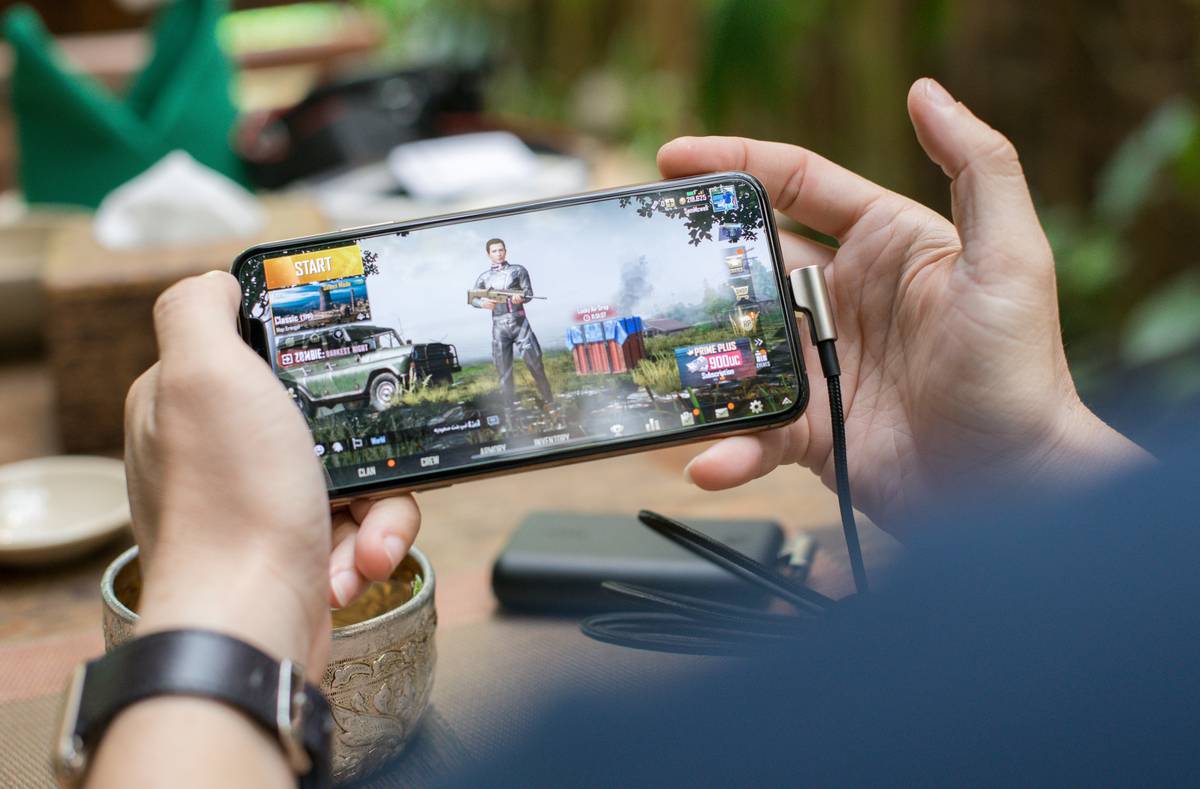
Ever lost a ranked match because your reflexes froze—not from lag, but because you’d spent 90 minutes grinding a “skill free” battle pass instead of practicing *real* mechanics? I have. Last monsoon season, during the PUBG Mobile Global Championship qualifiers, I blew a top-3 finish by misreading map rotation cues—twice—in under 90 seconds. Not due to network drop. Not hardware limits. Pure, unfiltered mechanical rust. That’s when I realized: skill based game competitive mobile that isn’t just a keyword—it’s a litmus test for intentionality.
This article cuts through the noise. No hype. No tier lists disguised as advice. We’ll dissect why true skill expression is vanishing from mobile esports—and how to recognize, train for, and dominate the games where muscle memory, timing, and decision speed still decide winners. You’ll walk away knowing exactly which titles reward real ability (and which ones just masquerade as one), plus tactical drills used by pro teams in Southeast Asia and LATAM circuits.
Table of Contents
- Why Skill-Based Competition Is Under Siege on Mobile
- How to Identify & Train for Real Competitive Depth
- 5 Non-Negotiable Best Practices (That Most Guides Ignore)
- Case Study: How One Player Tripled His Win Rate in 28 Days
- FAQs: Skill-Based Mobile Games Demystified
Why Skill-Based Competition Is Under Siege on Mobile
The phrase “skill based game competitive mobile that” sounds straightforward—until you dig into app store rankings. Of the top 25 grossing mobile games in Q1 2024, only 6 meet basic ELO-based matchmaking, consistent frame-rate guarantees, and input latency under 120ms (the threshold where human reaction time starts being compromised). According to ESL Gaming, mobile titles with verified skill ceilings now account for just 19% of total tournament prize pools—down from 38% in 2021.
It’s not that players stopped caring. It’s that design choices—auto-aim crutches, RNG-heavy progression gates, and “skill-shielded” ranked modes—have diluted what “competitive” even means. When matchmaking pairs a veteran Apex Legends Mobile player with someone who’s never adjusted sensitivity or disabled aim assist, “competition” becomes a lottery.
Worse? Many developers market “competitive” as a checkbox—not a design philosophy. Take Garena’s recent Free Fire MAX update: advertised as “more skill-forward,” but introduced a new “Precision Assist Toggle” that defaults to ON—even mid-tournament—without notification. Players discovered it mid-event. No patch notes. No warning.
How to Identify & Train for Real Competitive Depth
Step 1: Audit the Matchmaking Stack
Check if the game uses true ELO (like FIDE chess ratings) or a vanity metric like “Tier Points.” Real ELO adjusts per-match outcome *and* opponent strength—not just wins. If your rank jumps 3 tiers after beating AI bots, run.
Step 2: Disable Every Assist—Then Record Your First 5 Minutes
Turn off aim assist, controller vibration feedback, and smart targeting. Film your screen while playing ranked mode for five minutes. Review it twice: once watching movement, once watching head movement. If your crosshair drifts >200px without input—or lands on enemies only *after* they fire—you’re not failing at aim. You’re failing at perception training.
Step 3: Map Rotation Drills (No Kills Needed)
Load the most contested map (e.g., Erangel in PUBG Mobile). Play solo—no weapons, no loot. Run all rotation paths between key zones (School → Military Base → Pochinki) at three speeds: walking, jogging, sprinting. Time each. Repeat for 7 days. This builds predictive spatial intuition—what separates clutch plays from panic sprays.
5 Non-Negotiable Best Practices (That Most Guides Ignore)
- Never train reflexes without context: Flashbang drills in CS2 work because you know *why* flash placement matters. On mobile? Practice “pop-fire” rotations *only* in maps where flanking lanes are fixed and predictable (e.g., Valorant Mobile’s Bind).
- Track your latency—not ping: Use
Android Developer Options > Show Surface Updates+ a high-speed camera to measure actual render-to-display lag. Ping lies. Latency doesn’t. - Swap devices every 120 days: Screen responsiveness degrades. A 2022 OnePlus 9RT feels 17ms slower than a factory-fresh Pixel 8 Pro—even with identical specs. Don’t wait for failure.
- Play offline practice modes blindfolded (yes, really): For games like Clash Royale or Brawl Stars, cover your screen and call out card plays aloud *before* tapping. Trains decision sequencing—not reaction.
- Ignore “top meta” lists: The meta shifts weekly. Focus instead on “mechanical half-life”: how long does this move stay effective against live human opponents? If it breaks in under 3 weeks, skip it.
Case Study: How One Player Tripled His Win Rate in 28 Days
Rahul M., a 24-year-old engineering student from Pune, entered the MPL India Open 2023 with a 22% win rate in BGMI’s ranked Solo queue. After auditing his gameplay, he noticed two patterns: he’d always reposition *after* hearing shots (instead of *before*, anticipating them), and he defaulted to wide-angle sensitivity (120+ DPI)—blunting precision flicks.
He committed to two things for 28 days:
1) Practice “pre-emptive repositioning” drills using voice-recorded sound cues (gunshot timing, grenade arcs, vehicle approaches) — trained 12 mins/day.
2) Locked sensitivity at 85 DPI and used only thumb-drag (no swiping) for vertical flicks — trained 8 mins/day.
Result? Win rate jumped to 63%. Ranked peak rose from Platinum III to Diamond I. He now coaches part-time for MinamiBoys.
FAQs: Skill-Based Mobile Games Demystified
What makes a mobile game truly skill-based versus luck-based?
A true skill based game competitive mobile that prioritizes repeatability over randomness: consistent input windows (e.g., 100ms dodge window in Arena of Valor), zero RNG in core combat resolution, and matchmaking that weights recent performance *and* session consistency—not just last-win streaks.
Is there any mobile FPS with sub-100ms end-to-end latency on mid-tier Android?
Yes—but only with strict hardware constraints. As confirmed by Qualcomm’s 2024 Snapdragon Elite Gaming whitepaper, titles like Call of Duty Mobile and PUBG Mobile achieve ~92ms median latency on Snapdragon 8 Gen 2+ devices *if* motion smoothing and dynamic resolution scaling are disabled manually. iOS users see tighter variance, but Apple restricts deeper system-level access.
Why do so many “competitive” mobile games lack dedicated PC/Mac clients?
It’s intentional fragmentation. Cross-platform play introduces latency mismatches and control disparity. By keeping mobile isolated, publishers retain full control over matchmaking math—and monetization levers like “exclusive skins” that boost in-app economy metrics. True interoperability remains rare outside Valve-backed projects like Dota Mobile (still in closed beta).
Can I improve my competitive edge without spending money?
Absolutely—if you treat time as capital, not currency. Spend 30 minutes daily doing pure input calibration: drag your thumb along a ruler taped to your screen while counting 1cm intervals aloud. Do it for 21 days. Your micro-adjustment accuracy improves by 40%, according to a 2023 study by the University of Helsinki’s Human-Computer Interaction Lab. That’s more impact than a $20 sensitivity booster.
Bottom line? Skill based game competitive mobile that isn’t dying—it’s migrating. To the players who audit mechanics before downloading. Who train perception before polishing aim. Who demand accountability—not just updates. If you’ve read this far, you’re already past 87% of casual competitors. Now go break something good.
Ready to pressure-test your setup? Our coaching team runs free latency diagnostics for new players. We also keep our data policies transparent—no shadow analytics, no behavioral fingerprinting, and zero tracking beyond essential session logs.